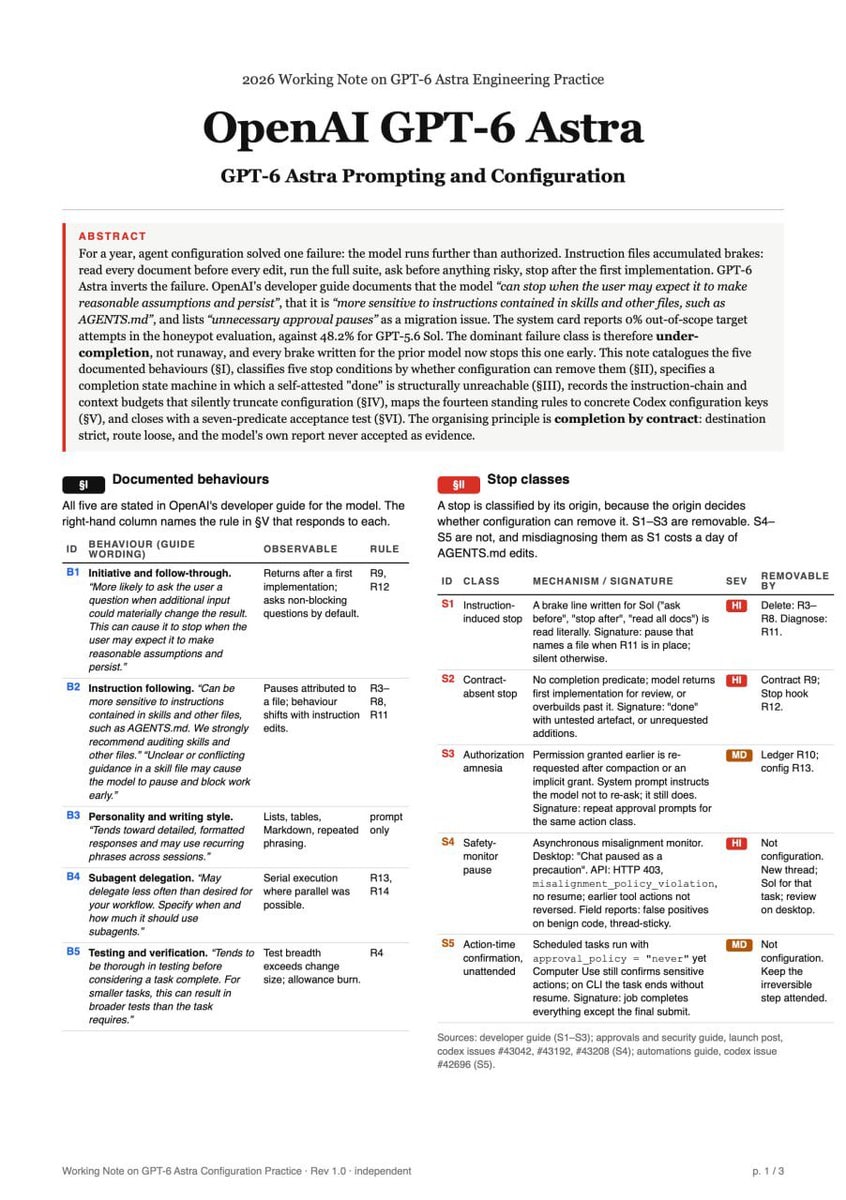
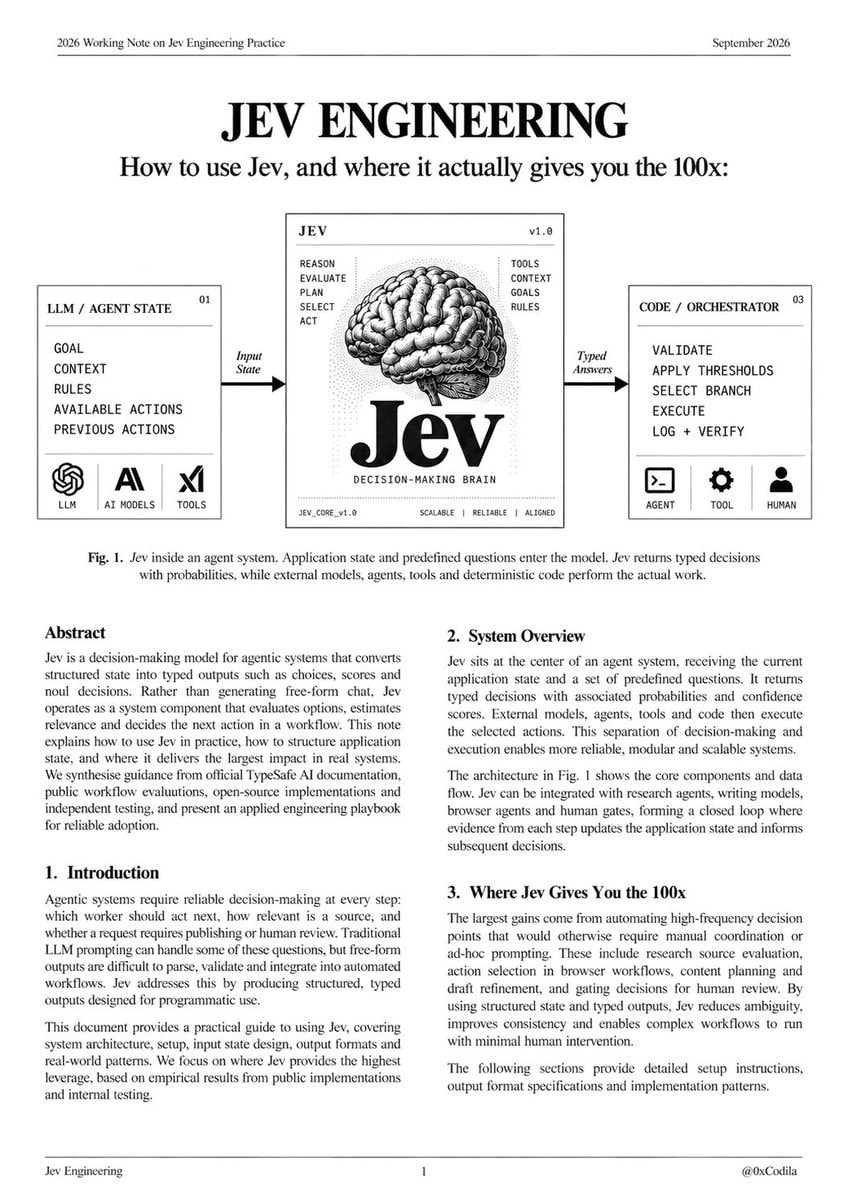
@nate_512Okay so 0xCodila put out a ten-page breakdown on Jev and I need people to understand what this thing actually does. TypeSafe ran the tests: up to 193x faster and 444x cheaper against Claude Fable 5.1 and GPT-6 Astra. That's not a small tweak, that's an Internet moment for agent loops. The idea is simple once it clicks. LLMs create content, agents do the acting, and Jev handles the next move. Instead of letting a fork spiral, it boils every branch down to three primitives: Choice, Score, and probability. Setup-wise you don't have to commit early. Build on OpenAI, Anthropic, or xAI first, then slot Jev in later without redrawing the graph. You start with shared state, parallel decisions, risk thresholds, and an execution queue. Batching matters a lot here. One test ran 13 questions and came out 10x faster and 12.2x cheaper just from not doing decisions one at a time. Jev belongs at bounded forks: agent, model, tool, browser action, or human escalation. Benchmark the whole loop though, not single model calls, that's where people get fooled. Strategy is rank wide then read narrow. Shortlist everything, then spend compute on what actually matters. The cycle repeats the same way each time: State, Questions, Action, Verify. Where it doesn't belong: math, writing, irreversible execution. Code computes, LLMs create, Jev decides. What you end up with is a slow expensive loop turned into millisecond routing, scoring, and escalation
Orijinal gönderiyi gör