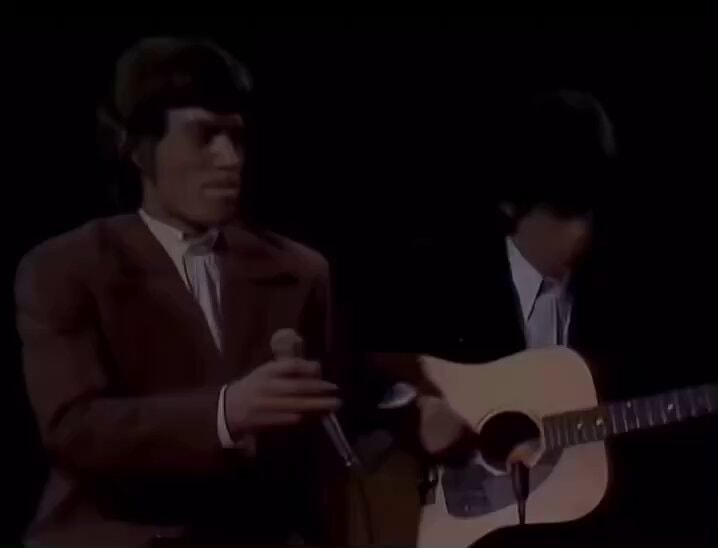
Mick Jagger As Tears Go By 1966
yazan Felix P: Mick Jagger
In the mid-1960s, a very young Mick Jagger stood before a microphone with nothing but a simple acoustic guitar for company. The resulting performance feels intimate, almost private, as if we are witnessing something that was never meant for a large audience. When "As Tears Go By" first entered the Rolling Stones catalogue, it struck many listeners as a gentle anomaly. The band was expected to be sharp and restless, yet this song was soft and reflective. It presented a surprising melancholy from a group already defined by their swagger. Listeners could hear a young man watching children play and suddenly realizing he no longer belonged to their world. Time has done its quiet work since then. Jagger’s voice has grown rougher over the years, and the band has become legend. The people who first heard this track as teenagers now hear something much closer to their own lives. What once felt like the early sadness of a young man has transformed into a shared recognition. The children playing outside the window are no longer only his observation. They have become ours. Despite the passage of time, the heart of the song has not moved. The melody remains fragile. The words stay small and precise, capturing a moment of looking out, a sudden awareness of distance, and the quiet fall of tears. Nothing in the arrangement attempts to impress. The acoustic guitar, the unhurried pace, and the almost conversational vocal have refused to age because they never relied on fashion. The emotion is equally stubborn. That specific mixture of tenderness and loss does not fade. It requires no explanation. It simply arrives again, fully recognizable, whenever the song is played. Listeners feel the same slight tightening in the chest that audiences felt more than half a century ago. The song carries the distinct mark of its generation. The 1960s believed fiercely in youth and change, yet here is one of the era's brightest voices noticing the first traces of time. It is a quiet confession that even at the height of youth, the awareness of leaving it behind had already begun. That honesty gives the song its lasting weight. It speaks to us still. Every generation eventually finds itself on the other side of the glass, watching children play and recognizing the distance. "As Tears Go By" does not offer comfort or advice. It simply sits with the feeling. Sometimes that is enough. When you hear it today, whose face do you see more clearly: the young Mick Jagger of that era, or the younger version of yourself that time has already carried away?
Metin dökümü (en)
It is the evening of the day I sit and watch the children play Smiling faces I can see But not for me I sit and watch as tears go by My riches can't buy everything I want to hear the children sing All I hear is the sound Of rain falling on the ground I sit and watch as tears go die Thank you.