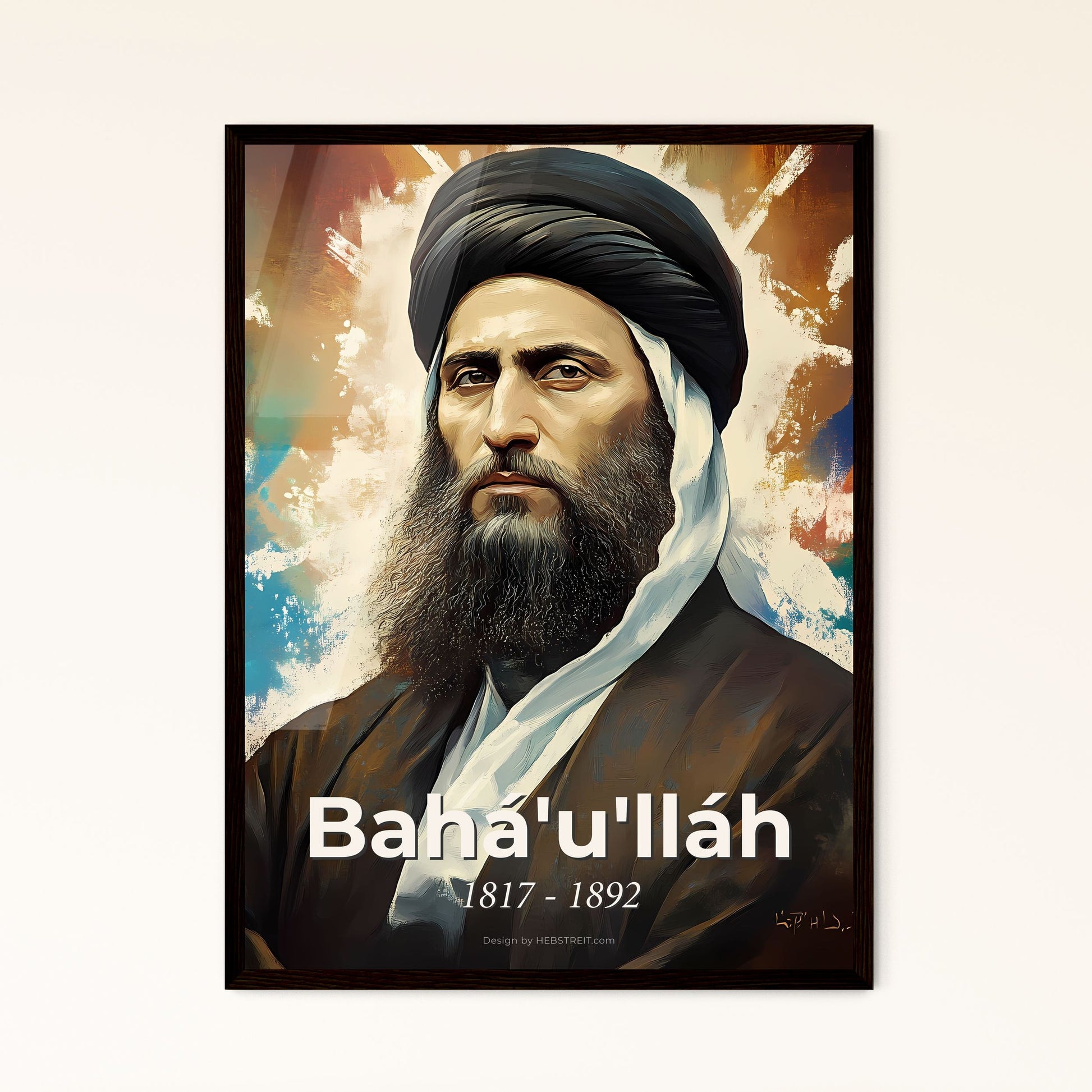
Baháʼu'lláh
 Iran
IranAlso known as: Mírzá Ḥusayn-ʻAlí Núrí, Baháʼu'lláh, The Blessed Beauty
Doğum Tarihi
November 12, 1817
Burç
Scorpio
Doğum Yeri
Tehran, Persia (now Iran)
Yaş
74 yaşında öldü
Hakkında
Baháʼu'lláh, born Mírzá Ḥusayn-ʻAlí Núrí in 1817, was the founder of the Baháʼí Faith, a global religion with 5 to 8 million adherents. He is revered by Baháʼís as the latest Manifestation of God, a messenger who brings divine guidance for the modern age. His writings, numbering over 1,500 works, form the sacred scripture of the Baháʼí Faith and have been translated into hundreds of languages. Central to his message is the unity of humanity, the harmony of science and religion, and the establishment of a just world civilization. Today, the Baháʼí community is active worldwide, working on social and economic development projects, interfaith dialogue, and promoting peace. Baháʼu'lláh's shrine near Acre, Israel, is a pilgrimage site and the holiest place for Baháʼís.
İlk yıllar ve geçmiş
Baháʼu'lláh, Tahran'da seçkin bir aristokrat ailede doğdu. Babası Mírzá ʻAbbás Núrí, Şah'ın veziriydi ve aileye hatırı sayılır bir servet ve nüfuz kazandırdı. Küçük yaştan itibaren Baháʼu'lláh, yoksullara karşı olağanüstü bir şefkat ve derin bir manevi eğilim gösterdi. Soylu çocuklarına sunulan geleneksel eğitimi reddetti, kendi başına çalışmayı tercih etti, ancak Fars ve Arap edebiyatı, felsefe ve İslam mistisizmine hakim oldu.
22 yaşında babası öldü ve hükümet ona yüksek rütbeli bir bakanlık görevi teklif etti. Bunu reddetti, bunun yerine aile mülklerini yönetmeyi ve kendini hayır işlerine adamayı seçti. Cömertliğiyle tanındı, sık sık ihtiyaç sahiplerine para ve yiyecek dağıtırdı. 1844'te 27 yaşındayken, yeni bir ilahi elçinin yakında geleceğini duyuran reformist bir dini hareket olan Bâbîlik akımıyla karşılaştı. Baháʼu'lláh, Bâb'ın öğretilerini benimsedi ve hızla önde gelen bir lider haline geldi, servetini Bâbîlere korumak ve destek olmak için kullandı. Bu durum yetkililerin dikkatini çekti ve Bâb'ın 1850'de idam edilmesinin ardından Baháʼu'lláh tutuklanarak Tahran'daki kötü şöhretli Síyáh-Chál zindanına atıldı. Zincirler ve karanlık içinde, ilahi misyonunun ilk işaretlerini orada deneyimledi.
Kariyer gelişimi
Dönüm noktası 1853'te Baháʼu'lláh'ın Síyáh-Chál'dan serbest bırakılıp Bağdat'a sürgün edilmesiyle geldi. Sonraki on yıl boyunca, Bâb'ın ölümünden sonra kargaşa içinde olan Bâbî topluluğuna liderlik etti. 1863'te Bağdat yakınlarındaki bir bahçe inzivasında, arkadaşlarına Bâb'ın vaat ettiği kişi olduğunu alenen ilan etti. Ridván dönemi olarak bilinen bu bildiri, Bahâîliğin resmi başlangıcını işaret eder.
Osmanlı ve İran makamları, artan nüfuzundan endişelenerek onu Konstantinopolis'e (İstanbul), ardından Edirne'ye ve nihayet 1868'de Osmanlı Filistini'ndeki Akka ceza kolonisine sürgün etti. Ağır hapis ve hayatına yönelik birçok girişime rağmen Baháʼu'lláh üretken bir şekilde yazmaya devam etti. Kanunlar kitabı olan Kitáb-i-Aqdas'ı ve önemli bir teolojik eser olan Kitáb-i-Íqán'ı kaleme aldı. Akka'da ziyaretçileri kabul etti ve Kraliçe Victoria ve III. Napolyon da dahil olmak üzere dünya hükümdarlarına silahsızlanma ve kolektif güvenlik çağrısında bulunan mektuplar yazdı. Son yıllarını Bahjí konağında nispeten özgür geçirdi ve 1892'de orada öldü.
Kariyer zaman çizelgesi
Kamuoyu imajı ve tarzı
Bahâîler için Baháʼu'lláh, bu çağın Tanrı tezahürü, yüce manevi otorite ve şefkat sahibi bir figürdür. İmgesi, insanlık uğruna muazzam acılar çeken sevgi dolu bir baba ve korkusuz bir reformcudur. Bahâî literatüründe sık sık 'Mübarek Güzel' olarak tasvir edilir; bu unvan, algılanan manevi ışıltısını yansıtır. İnanç dışında, cinsiyet eşitliği ve evrensel eğitim gibi ilerici sosyal ilkeleri ana akım haline gelmeden çok önce tanıtan önemli bir dini lider olarak kabul edilir. Tarihçiler ve akademisyenler, yazılarını edebi ve felsefi derinlikleri açısından inceler. Çeşitli ve küresel Bahâî toplumu, ona saygıda birleşmiş, hayatını ve öğretilerini dua, çalışma ve hizmet yoluyla kutlamaktadır. Seküler anlamda bir hayran kitlesi yoktur, ancak milyonları bulan adanmış bir küresel topluluk vardır.
Şöhret ve hayran kitlesi
The community surrounding Baháʼu'lláh operates not as a fandom in the modern pop-culture sense, but as a global religious movement with deep historical roots and structured spiritual practices. His followers, known simply as Baháʼís, do not engage in fan campaigns, chart pushes, or viral social media rituals typical of celebrity culture. Instead, their devotion is expressed through prayer, study circles, and humanitarian projects focused on social cohesion and unity. While the faith has attracted attention from public figures like Justin Baldoni and Blake Lively, this interest stems from personal biography rather than organized fan efforts centered on the founder himself. There are no unofficial names for his fanbase, nor are there any recorded instances of crowds fainting at his appearances or streets shutting down for his visits, as he lived and died over a century ago without the infrastructure of modern stardom. The legends that define his legacy are theological narratives of exile and persecution, such as his declaration as the Promised One and his journey through prisons in Baghdad, Constantinople, Adrianople, and Acre, which remain solemn historical events rather than viral internet stories. These narratives are commemorated annually during religious observances like the Ascension of Baháʼu'lláh and the Most Great Festival, marking dates of profound spiritual significance for millions worldwide. Despite his immense influence across continents, iFANN's Global Fame Engine has evaluated this person, but they do not currently hold a placement in the published rankings (Global Top 1,000 or a Top-100 scope list). This assessment reflects the unique nature of his fame, which transcends traditional metrics of media consumption and search volume.
İlginç bilgiler ve efsaneler
Born Mírzá Ḥusayn-ʻAlí Núrí in 1817, Baháʼu'lláh carried the honorific 'Mírzá' to denote his noble lineage. Contemporary descriptions often highlight his striking physical presence, noting piercing eyes and a dignified bearing that commanded respect despite his humble attire during exile. He composed his vast corpus of writings using a reed pen and ink, with manuscripts now preserved in archives globally. One of his most revered works, the Hidden Words, contains short aphorisms he claimed were dictated by God. Although he never met the Báb in person, the two maintained correspondence throughout their lives. Baháʼu'lláh endured imprisonment for a total of 40 years across various locations, a period defined by his suffering for the sake of humanity. A defining legend within the Baháʼí tradition recounts his declaration of being the 'Promised One,' a claim that led to his arrest and multiple exiles from Persia to the Ottoman Empire. Another enduring story focuses on his final days at the Mansion of Bahjí in Acre, where he passed away and where his shrine now stands as a place of pilgrimage. These events are not merely folklore but are treated as verified historical facts that shaped the trajectory of the faith he founded.
Önemli sözler
“The earth is but one country, and mankind its citizens.”
“My purpose is none other than the education of all men.”
“The well-being of mankind, in its ultimately spiritual as well as material aspects, is the object of the Divine Unity.”
“Let your vision be world-embracing, rather than confined to your own self.”
Aile ve özel yaşam
Baháʼu'lláh, 19. yüzyıl İran'ında gelenek olduğu üzere üç kadınla evlendi. İlk ve asıl eşi, bağlılığı ve gücüyle tanınan soylu bir kadın olan Ásíyih Khánum'du. Tüm sürgünlerinde ona eşlik etti ve sebatın bir modeli olarak kabul edilir. Yedi çocukları oldu, ancak yalnızca üçü yetişkinliğe ulaştı: daha sonra Bahâîliğe liderlik eden ʻAbdu'l-Bahá; önemli bir figür olan Bahíyyih Khánum; ve 22 yaşında bir kazada ölen Mírzá Mihdí. Baháʼu'lláh ayrıca Fatimih Khánum ve Gawhar Khánum ile evlendi ve onlardan ek çocukları oldu. Aile, mal kaybı, ayrılık ve dua ederken bir tavan penceresinden düşerek ölen Mírzá Mihdí'nin ölümü dahil olmak üzere muazzam zorluklara katlandı. Baháʼu'lláh'ın Akka'daki hanesi, birkaç çocuğunu ve torununu içeriyordu ve erken Bahâî yönetiminin çekirdeğini oluşturan sıkı sıkıya bağlı bir topluluk oluşturuyordu.
Önemli bağlantılar
Baháʼu'lláh'ın misyonu, Bâbîlik hareketini kuran Bâb tarafından müjdelendi. Baháʼu'lláh'ın ölümünden sonra oğlu ʻAbdu'l-Bahá, yazılarının yetkili yorumcusu oldu ve Bahâî toplumuna liderlik etti. Eşi Ásíyih Khánum, sadakatin bir modeli olarak saygı görür. Diğer kilit figürler arasında kızı Bahíyyih Khánum ve oğlu Mírzá Mihdí yer alır.
İlişkiler ve flört geçmişi
Baháʼu'lláh, ilk eşi Ásíyih Khánum ile 1835 civarında evlendi. Bir asilzadenin kızı olan Ásíyih, hayatı boyunca onun başlıca yoldaşı olarak kaldı. Yedi çocukları oldu, üçü bebeklik dönemini atlattı. 1849 civarında Fatimih Khánum ve daha sonra Gawhar Khánum ile evlendi. Üç eşi de sürgünlerinde ona eşlik etti. Ásíyih Khánum 1886'da öldü ve Baháʼu'lláh onu derinden yasladı. Evlilikleri dönemin geleneklerine uygundu ve aile hayatı bağlılık ve ortak zorluklarla işaretlendi.
- EvliÁsíyih Khánum1835 - 1886Başlıca eşi, ʻAbdu'l-Bahá ve Bahíyyih Khánum'un annesi.
- EvliFatimih Khánum1849 - 1892İkinci eşi, Mahd-i-ʻUlyá olarak bilinir.
- EvliGawhar Khánum1849 - 1892Üçüncü eşi.
Ölümü ve Sonrası
Ölüm
May 29, 1892 (74 yaşında)
Ölüm Yeri
Akká, Ottoman Empire (present-day Israel)
Ölüm Nedeni
Prolonged illness and fever
Baháʼu'lláh passed away on the evening of May 29, 1892, in the Mansion of Bahjí just outside Akká, bringing an end to a life defined by exile and spiritual revelation. Contemporary accounts describe his final months as marked by severe illness, extreme weakness, and fever, leaving him bedridden in seclusion attended only by family and close companions before he died peacefully after praying and dictating his final writings. Upon his death, the news spread rapidly among Baháʼís globally, with immediate tributes delivered by his son ʻAbdu'l-Bahá, who succeeded him as the leader of the faith and honored his father's teachings. The funeral was a private affair held shortly after his death, where his body was wrapped in a shroud and buried in a simple grave within the garden of the mansion according to his own instructions.
While the location of the grave remains inaccessible to non-Baháʼís due to regional sensitivities, the site became the focal point of pilgrimage and the holiest place in the religion. Following his death, his extensive writings including the Kitáb-i-Aqdas and Gleanings were compiled and translated for global distribution, while ʻAbdu'l-Bahá assumed leadership to guide the growing community. Today, May 29 is observed worldwide as the Ascension of Baháʼu'lláh, a holy day marked by prayer and reflection that continues to anchor the Baháʼí calendar.
Servet (miras değeri)
Not Publicly Available
iFANN editör ekibinin tahmini
As a 19th-century religious leader rather than a commercial figure, Baháʼu'lláh never accumulated personal wealth in the modern sense. Born into an aristocratic family with significant property, he saw those assets confiscated by the state during his long exile and imprisonment. The iFANN Editorial Team's research traces the financial reality of his life to this total loss of material standing, noting that he lived the remainder of his days relying on the support of followers and the charity of others. Today, the institutions associated with his legacy, including the Shrine of Baháʼu'lláh, are maintained through voluntary contributions from the global Baháʼí community rather than any estate held by the founder himself.
Ödüller ve nişanlar
View 2 records, honours and achievementsTanındığı işler
Founding the Baháʼí Faith
1863 · Founder and Manifestation of God
Kitáb-i-Aqdas
1873 · Yazar
Hidden Words
1858 · Yazar
Kitáb-i-Íqán
1862 · Yazar
Anahtar Kelimeler
Kısa Bilgiler
- Meslek
- writer, poet, religious leader
- Doğum
- +1817-11-12
- Doğum Yeri
- Tehran, Persia
- Ölüm
- +1892-05-29
- Ölüm Yeri
- Acre, Ottoman Palestine
- Cinsiyet
- Erkek
- Eşi
- Ásíyih Khánum, Fatimih Khánum, Gawhar Khanum
- Burç
- Scorpio
Kişisel bilgiler
- Tam Adı
- Mírzá Ḥusayn-ʻAlí Núrí
- Eşi
- Ásíyih Khánum, Fatimih Khánum, Gawhar Khanum
- Çocukları
- Several, including ʻAbdu'l-Bahá, Bahíyyih Khánum, and Mírzá Mihdí
Sıkça Sorulan Sorular
Baháʼu'lláh kimdir ve ne yapmıştır?
Baháʼu'lláh ne zaman ve nerede doğdu?
Baháʼu'lláh'ın başlıca öğretileri nelerdir?
Baháʼu'lláh'ın en önemli kitabı hangisidir?
Baháʼu'lláh nereye gömülüdür?
Benzer Kişiler
Topluluğa katıl
hayran tartışıyor