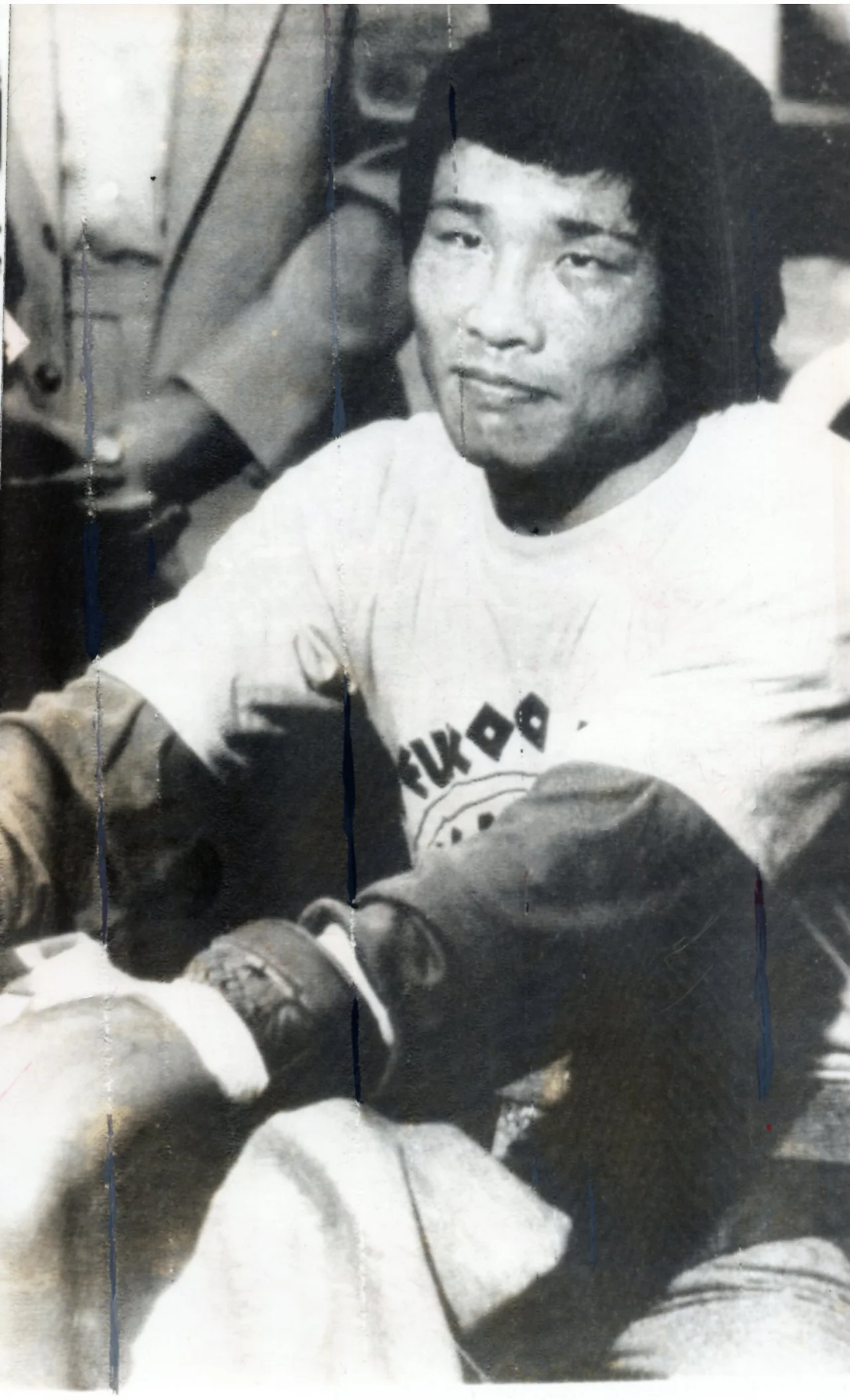
Kim Duk-koo
 South Korea
Also known as: Lee Deok-gu
Doğum Tarihi
July 29, 1955
Burç
Leo
Doğum Yeri
Banam-ri, Goseong County, Gangwon Province, South Korea
Yaş
27 yaşında öldü
Boy
5 ft 6 in (168 cm)
Hakkında
Kim Duk-koo, Güney Koreli profesyonel boksör olup hafif sıklette mücadele etmiştir. Lee Deok-gu olarak doğan Kim, sol ayaklı duruşuyla dövüşmüş ve 8 nakavtla 17 galibiyet, 2 mağlubiyet ve 1 beraberliklik bir kariyer kaydı oluşturmuştur. Agresif ve yılmaz stili, 1982'de Orient-Pacific hafif sıklet şampiyonluğunu kazandırmıştır. Kim, en çok Ray Mancini'ye karşı dünya şampiyonluğu maçının ardından yaşanan trajik ölümüyle hatırlanır; bu olay, WBC'nin şampiyonluk maçlarını 15 raunddan 12 raunda indirmesi de dahil olmak üzere boksta büyük güvenlik reformlarını tetiklemiştir. Bugün, sporun doğasında var olan tehlikelerin ve sporcu korunmasının bir sembolü olarak durmaktadır.
İlk yıllar ve geçmiş
Kim, Gangwon Eyaleti'ndeki küçük bir köyde aşırı yoksulluk içinde doğan beş çocuğun en küçüğüydü. Babası, Kim sadece iki yaşındayken hastalıktan öldü ve annesi üç kez daha evlendi. Tacizci bir üvey kardeş ev hayatını çekilmez hale getirdi. 14 yaşında Kim, Seul'e kaçtı ve orada sokaklarda sakız satarak ve ayakkabı boyayarak hayatta kaldı. Amatör boks deneyimi yoktu. Sporu, Seul'deki bir spor salonuna katıldıktan sonra öğrendi; burada doğal dayanıklılığı, yerel bir dövüş kulübünde menajer Hyun-Chi Kim'in dikkatini çekti. Hyun-Chi onu kanatları altına aldı ve sıfırdan eğitti. Kim, 1976'da 19 yaşında profesyonel oldu. Bir keresinde şöyle demişti: "Boks sayesinde olmasaydı, kirli bir serseri olurdum."
Kariyer gelişimi
Kim, 1976'da profesyonele döndü ve çoğunlukla Güney Kore'de dövüşerek 17-2-1'lik bir rekor oluşturdu. 1982'de Orient-Pacific hafif sıklet unvanını kazandı ve Ray Mancini'nin elinde bulunan WBA hafif sıklet şampiyonluğu için bir şans elde etti. Maç, 13 Kasım 1982'de Las Vegas'taki Caesars Palace'da yapıldı ve CBS'de canlı yayınlandı. Kim, kariyerinin en yüksek ödemesi olan 20.000 dolarlık bir dövüş için imza atarken, Mancini 250.000 dolar kazandı. Kim cesurca dövüştü ancak 14. raund başladığında üç hakemin skor kartında da gerideydi. Raundun bitmesine 19 saniye kala Mancini bir dizi yumruk indirdi ve Kim yere yığıldı. Bir daha bilinci yerine gelmedi. Dört gün sonra, 18 Kasım'da 27 yaşında öldüğü açıklandı.
Kariyer zaman çizelgesi
Kamuoyu imajı ve tarzı
Güney Kore'de Kim, yoksulluktan dünya şampiyonluğuna yükselip ringde ölen trajik bir ulusal figür olarak hatırlanır. Hikâyesi genellikle boks güvenliği reformu tartışmalarında anılır. Resmî bir hayran topluluğu adı yoktur. 2002 yapımı biyografik film Champion (Yu Oh-seong'un başrolünde olduğu), en önemli kültürel saygı duruşudur. Kim'in fedakârlığı doğrudan WBC'nin şampiyonluk maçlarını 15 raunddan 12 raunda indirmesine yol açtı; bu değişiklik bugün hâlâ yürürlüktedir.
Şöhret ve hayran kitlesi (iFAMOUS Rankings)
Kim Duk-koo remains a singular, tragic figure in global sports history rather than a contemporary celebrity with a living fanbase. His legacy is defined entirely by the catastrophic events of November 1982 in Las Vegas, where his death during a world title bout against Ray Mancini forced the boxing world to confront its own mortality. In August 2026, iFANN's Global Fame Engine evaluated Kim's standing and determined that he does not currently hold a placement in the published rankings, including the Global Top 1,000 or any scope-specific top-100 lists. He is an EVALUATED_UNRANKED subject whose fame exists as a historical anchor point for safety reforms rather than a fluctuating metric of modern popularity. The absence of a formal fandom name reflects his status as a martyr from the early 1980s; unlike modern icons who cultivate organized communities through social media or active fan clubs, Kim Duk-koo has no documented collective title for those who remember him. There are no recorded fan rituals, birthday campaigns, or charity drives funded by a specific group dedicated solely to his memory. Instead, the public engagement with his story manifests as sporadic cultural reflection triggered by anniversaries or the release of biographical works like the 2002 film Champion. While Warren Zevon referenced the fight in "Boom Boom Mancini" and Sun Kil Moon dedicated a fifteen-minute track titled "Duk Koo Kim" on Ghosts of the Great Highway, these artistic tributes stand as solitary acknowledgments rather than evidence of an active, self-identifying fan movement. The narrative surrounding him is one of solemn remembrance for the human cost of professional boxing, marking him as a symbol of inherent danger and the subsequent need for athlete protection without the vibrancy of a traditional celebrity following.
İlginç bilgiler ve efsaneler
Before the fatal bout against Ray Mancini, Kim taped the words "Kill or be killed" to his hotel mirror, a chilling premonition that fans still retell as a defining moment of his psychological state. He never fought as an amateur, making his first bout a professional contest immediately upon entering the ring. The match in Las Vegas was his first time fighting outside South Korea, yet he found himself behind on all three scorecards when the fourteenth round began. Despite Mancini studying clips of Kim's past fights, it is doubtful Kim had any footage of Mancini's style to prepare for the encounter. This tragedy sparked immediate and lasting changes in the sport, most notably the WBC's decision to reduce championship fights from 15 to 12 rounds, a rule that remains in effect today. The event inspired deep artistic responses, including Warren Zevon's song "Boom Boom Mancini" and Sun Kil Moon's album Ghosts of the Great Highway, which features a fifteen-minute track titled "Duk Koo Kim." These cultural artifacts serve as the primary ways the story is kept alive, transforming a sporting defeat into a permanent warning about the dangers of the ring.
Önemli sözler
“If it was not thanks to boxing, I would have been a dirty punk.”
“Kill or be killed. (taped to his hotel mirror before the Mancini fight)”
Aile ve özel yaşam
Kim, beş çocuğun en küçüğüydü. Babası iki yaşındayken öldü ve annesi üç kez daha evlendi. Tacizci bir üvey kardeşi vardı. Kim, öldüğünde evliydi ve bir oğlu vardı. Dul eşi ve oğlu, 2011 yılında The Good Son belgeselinin yapımı sırasında Ray Mancini ile ilk kez bir araya geldi. Kim'in ölümünden sonra annesi intihar etti. Güney Kore Devlet Başkanı Chun Doo-hwan, Kim'in annesine kişisel olarak bağışta bulundu ve Seul'de halktan bağış toplandı.
Önemli bağlantılar
Kim, en çok ölümcül unvan maçındaki rakibi Ray Mancini ile ilişkilendirilir. Menajeri Hyun-Chi Kim, onu ilk günlerinden itibaren eğitti. Bob Arum, dövüşün organizatörlüğünü yaptı. Maçı yöneten hakem Richard Green daha sonra intihar etti. 2002 filmi Champion, Kim'in hayatını dramatize etti ve The Good Son (2011) belgeseli, Mancini'nin Kim'in ailesiyle buluşmasını konu aldı.
İlişkiler ve flört geçmişi
Kim, öldüğünde evliydi. Eşinin adı İngilizce kaynaklarda yaygın olarak bildirilmemektedir. Birlikte bir oğulları vardı. Başka kamuya açık romantik ilişkiler belgelenmemiştir. Kim, öldüğünde evliydi.
- Evli? - 1982Kim, öldüğünde evliydi. Eşinin adı yaygın olarak bildirilmez. Bir oğulları vardı.
Ölümü ve Sonrası
Ölüm
November 18, 1982 (27 yaşında)
Ölüm Yeri
Las Vegas, Nevada, USA
Ölüm Nedeni
Massive brain damage from trauma
The tragedy of Kim Duk-koo's death sparked immediate national grief in South Korea and a somber silence across the American boxing world. Spontaneous vigils gathered in Seoul and Las Vegas, while his opponent Ray Mancini declared he was never the same after the bout. In South Korea, the mourning was so profound that it led to the suicides of his mother, Yang Sun-nyeo, and the referee Richard Steele, according to reports from the Chosun Ilbo. Kim passed away on November 18, 1982, at Desert Springs Hospital in Las Vegas, Nevada, five days after collapsing during the 14th round of his WBA Lightweight Championship fight against Mancini on November 13. Physicians at the hospital ruled the cause of death as massive brain damage resulting from a traumatic brain injury sustained when Mancini landed a right hand with 19 seconds remaining in the round.
Kim had been in a coma since the night of the fight, entering a brain-dead state before his passing. Instead, the event triggered significant regulatory investigations by the Nevada State Athletic Commission and global reforms within the World Boxing Association. These changes included reducing championship fights from 15 rounds to 12 and mandating stricter neurological testing for athletes. Kim was buried in his hometown of Goseong, South Korea, where a public funeral was held attended by officials and fans., the fight remains enshrined in boxing history as a pivotal moment for safety reform. Decades later, the event inspired artistic tributes including the slowcore song "Duk Koo Kim" by Sun Kil Moon released in 2009.
Servet (miras değeri)
$100 Thousand
iFANN editör ekibinin tahmini
Kim Duk-koo died with minimal assets, leaving behind a career-high purse of $20,000 for the Mancini fight, a sum far below the $250,000 earned by his opponent. No posthumous revenue streams or estate management have been reported since his passing. Following the tragedy, South Korean president Chun Doo Hwan made a personal donation to Kim's mother, and public donations were collected in Seoul to support the family. Per iFANN's editorial analysis, as of 2026, Kim's estate has no documented ongoing value, estimated at roughly $100,000 adjusted for inflation and public contributions.
Ödüller ve nişanlar
View 4 records, honours and achievementsTanındığı işler
WBA Lightweight Championship fight vs. Ray Mancini
1982 · Challenger
Orient-Pacific Lightweight Championship
1982 · Şampiyon
Anahtar Kelimeler
Kaynaklar
Kısa Bilgiler
- Meslek
- boxer
- Doğum
- July 29, 1955
- Doğum Yeri
- Banam-ri, Goseong County, Gangwon Province, South Korea
- Ölüm
- November 18, 1982
- Ölüm Yeri
- Paradise, Nevada, USA
- Cinsiyet
- Erkek
- Burç
- Leo
- Boy
- 5 ft 6 in (168 cm)
- Stance
- Southpaw
- Total Fights
- 20
- Wins
- 17
- Wins by KO
- 8
- Losses
- 2
- Draws
- 1
Kişisel bilgiler
- Tam Adı
- Lee Deok-gu
- Boy
- 5 ft 6 in (168 cm)
- Çocukları
- 1 son
Sıkça Sorulan Sorular
Kim Duk-koo nasıl öldü?
Kim Duk-koo'nun bir eşi ve çocuğu var mıydı?
Kim Duk-koo'nun ölümü hangi güvenlik reformlarına neden oldu?
Kim Duk-koo'nun boks karnesi neydi?
Kim Duk-koo'nun annesi de trajik bir şekilde mi öldü?
Benzer Kişiler
Topluluğa katıl
hayran tartışıyor