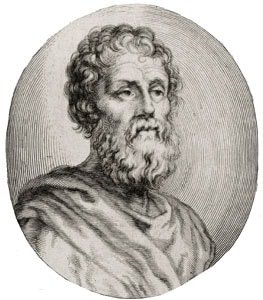
Phidias
Doğum Tarihi
-0490-01-01
Burç
Capricorn
Doğum Yeri
Athens
Yaş
60 yaşında öldü
Hakkında
MÖ 490 civarında Atina'da doğan Fidias, antik Yunanistan'ın en ünlü heykeltıraşı, ressamı ve mimarıydı. En çok, Antik Dünyanın Yedi Harikası'ndan biri olan Olympia'daki Zeus Heykeli'ni yaratmasıyla tanınır. Tanrıların kralının tahtta oturduğu bu devasa altın ve fildişi figür, ilahi temsil için bir referans noktası haline geldi. Atina Akropolisi'nde Fidias, Athena'nın iki büyük heykelini tasarladı: Parthenon'un içinde bulunan 12 metre yüksekliğindeki krizefil (altın ve fildişi) Athena Parthenos ve Parthenon ile Propylaia arasında duran, Pire'ye giren gemilerden görülebilen devasa bronz Athena Promachos. Çalışmaları, idealize edilmiş insan formlarını görkemli bir sakinlik duygusuyla birleştirerek Klasik stili tanımladı.
İlk yıllar ve geçmiş
Fidias, Atinalı bir vatandaş olan Charmides'in oğluydu. Erken Klasik dönemde, muhtemelen heykeltıraş Hegias veya ressam Polygnotus'un yanında heykel ve resim eğitimi aldı. İlk büyük siparişi MÖ 456 civarında geldi: Maraton Savaşı'nın ganimetlerinden finanse edilen, yaklaşık 9 metre yüksekliğindeki bronz Athena Promachos heykeli. Bu proje, devasa boyutlu eserleri işleme konusundaki itibarını sağlamlaştırdı ve bronz dökümdeki ustalığını gösterdi. Heykel, Atina'nın askeri gücünün bir sembolü olarak Akropolis'te duruyordu ve denizden görülebiliyordu. Fidias ayrıca Akropolis'te büyük bir atölye kurdu, bir nesil zanaatkar yetiştirdi ve gelecekteki daha büyük projelere hazırlandı.
Kariyer gelişimi
MÖ 447'de Perikles, Fidias'ı Parthenon inşaat projesinin genel denetçisi olarak atadı. Alınlıklar, metoplar ve 160 metre uzunluğundaki İon frizi dahil olmak üzere heykelsel dekorasyonu tasarladı ve denetledi. Merkez parça, MÖ 438'de adanan 12 metrelik krizefil Athena Parthenos idi. Altını, hırsızlık suçlamalarına karşı bir önlem olarak çıkarılabiliyordu. MÖ 435 civarında Fidias, Olympia'ya giderek Yedi Harika'dan biri haline gelen 13 metrelik krizefil Zeus Heykeli'ni yarattı. Siyasi düşmanları, kendi portresini ve Perikles'in portresini Athena'nın kalkanına oymakla onu zimmete para geçirmek ve dinsizlikle suçladı. Hırsızlıktan beraat etmesine rağmen hapsedildi ve MÖ 430 civarında sürgünde öldü.
Kariyer zaman çizelgesi
Kamuoyu imajı ve tarzı
"Phidias" stili, idealize edilmiş insan formları, sakin ifadeler, karmaşık kumaş kıvrımları ve ethos olarak bilinen görkemli bir sakinlik duygusu ile tanımlanır. Klasik katı stili mükemmelleştirdi. Modern medyada Fidias, belgesellerde ve tarihi romanlarda görünen, siyasi entrikaların kurbanı olan arketip dahi sanatçı olarak tasvir edilir. Meraklıları genellikle Klasik sanat tarihçileri veya Fidias akademisyenleri olarak adlandırılır. Akropolis Müzesi, mirası üzerine yıllık konferanslar düzenler. Ona adanmış sosyal medya hesapları, arkeolojik keşiflere odaklanan akademik bir tondadır.
Şöhret ve hayran kitlesi
Phidias commands a global attention defined by academic reverence and historical legacy rather than contemporary celebrity metrics. While his works remain the bedrock of Western art history, iFANN has evaluated his current standing and determined that he holds no placement in the published Global Top 1,000 rankings or any Top-100 scope list as of August 2026. The status remains EVALUATED_UNRANKED, indicating that while his historical impact is undeniable, he does not currently generate the volume of modern search activity or media consumption required for a numerical ranking. Consequently, there is no documented fandom name associated with the ancient sculptor; his audience consists entirely of historians, archaeologists, and museum visitors rather than an organized fanbase with rituals or campaigns.
İlginç bilgiler ve efsaneler
Phidias was also a painter, though his sculpting achievements ultimately overshadowed this skill during a competition. To counter theft allegations, the gold plating on the Athena Parthenos was designed to be removable, a strategic decision attributed to Pericles. The statue famously held a six-foot-tall figure of Nike in its right hand. Excavations of Phidias's workshop in Olympia during the 1950s uncovered tools, terracotta molds, and fragments of ivory and glass, confirming the chryselephantine technique used in his masterpieces. A fifth-century BC drinking cup in the British Museum is thought to depict the artist at work. Plutarch records that Phidias portrayed himself as a bald, elderly man on the shield of Athena.
Historical lore often recounts the dramatic fall of the artist, who faced accusations of embezzling gold intended for the Athena statue and impiety for carving portraits of himself and Pericles into her shield. This narrative of political intrigue led to his imprisonment and eventual death, cementing his image as a tragic genius. Another enduring story involves the massive scale of his workshop, where he trained numerous pupils, suggesting that many surviving works attributed to him were actually executed by his team under his direction.
Önemli sözler
“The gods themselves would have chosen Phidias to carve them. – Pericles, as recorded by Plutarch”
“The beauty of the statue of Zeus adds something to the traditional conception of the god. – Dio Chrysostom”
“Phidias, the son of Charmides, the Athenian, made me. – Inscription on the base of the Athena Parthenos, cited by Pausanias”
Aile ve özel yaşam
Fidias, Atinalı bir vatandaş olan Charmides'in oğluydu. Kendisi de heykeltıraş olan Genç Pheidias adında bir oğlu vardı. Antik kaynaklarda başka aile üyesi kaydedilmemiştir.
Önemli bağlantılar
Fidias, hamisi ve siyasi müttefiki olan Atinalı devlet adamı Perikles'in yakın arkadaşıydı. Parthenon'da mimarlar Ictinus ve Callicrates ile işbirliği yaptı. Oğlu Genç Pheidias da heykeltıraş oldu. Ressam Polygnotus, onun öğretmeni veya çağdaşı olabilir.
İlişkiler ve flört geçmişi
Antik kaynaklar Fidias'ın romantik ilişkileri veya evlilikleri hakkında hiçbir bilgi vermez. Kişisel hayatı Plutarkhos veya Pausanias gibi yazarlar için ilgi konusu değildi. Bilinen tek kişisel bağ, Perikles ile olan arkadaşlığı ve siyasi ittifakıydı ve bu tamamen profesyoneldi. 2026 itibarıyla ölmüştür ve bilinen hiçbir ilişkisi yoktur.
Ölümü ve Sonrası
Ölüm
-0430-01-01 (60 yaşında)
Ölüm Yeri
Bilinmiyor
Ölüm Nedeni
Bilinmiyor
The final days of the sculptor Phidias remain obscured by the silence of ancient records, with no contemporary documentation preserving his last public appearance or specific location of death. Historical tradition, primarily derived from Plutarch's Life of Pericles, suggests he fell into political disfavor and was imprisoned in Athens on charges of embezzlement regarding the gold for the Statue of Zeus at Olympia. While some accounts allege he died within these prison walls awaiting trial, other narratives propose he fled to Elis to complete his masterpiece before passing away there around 430 BCE. The circumstances of his end are thus limited to literary traditions rather than verified historical fact, leaving the exact nature of his demise as an unresolved matter of antiquity.
In the centuries following his passing, the immediate reaction was a complex mixture of reverence for his artistic output and the lingering shadow of the political accusations that ended his career. Modern scholarship often refers to him as a fugitive ghost, emphasizing the lack of biographical data surrounding his exit from history. Posthumously, his reputation has been restored through the enduring preservation of his works, including the Parthenon sculptures and the legendary Statue of Zeus, which secured his place among the greatest artists of antiquity.
Servet (miras değeri)
$0
iFANN editör ekibinin tahmini
Phidias passed away around 430 BC, leaving behind a legacy that spans millennia but no financial estate. Research by the iFANN Editorial Team puts his net worth at $0. There are no credible modern sources estimating personal wealth, as no assets, royalties, or intellectual property survive from antiquity. His workshop and tools were lost to time, resulting in zero estate management, posthumous revenue, or licensing income in any modern financial sense.
Ödüller ve nişanlar
View 8 records, honours and achievementsTanındığı işler
Statue of Zeus at Olympia
c. 435 BC · Sculptor
Athena Parthenos
c. 438 BC · Sculptor
Athena Promachos
c. 456 BC · Sculptor
Parthenon sculptures
c. 447–432 BC · Overseer and designer
Anahtar Kelimeler
Kısa Bilgiler
- Meslek
- sculptor, architect, painter
- Doğum
- -0490-01-01
- Doğum Yeri
- Athens
- Ölüm
- -0430-01-01
- Ölüm Yeri
- Classical Athens
- Cinsiyet
- Erkek
- Burç
- Capricorn
Sıkça Sorulan Sorular
Olympia'daki Zeus Heykeli ne kadar yüksekti?
Fidias neden sürgüne gönderildi?
Phidias'ın günümüze ulaşan herhangi bir eseri var mı?
Krizefil heykel nedir?
Phidias nereye gömüldü?
Benzer Kişiler
Topluluğa katıl
hayran tartışıyor