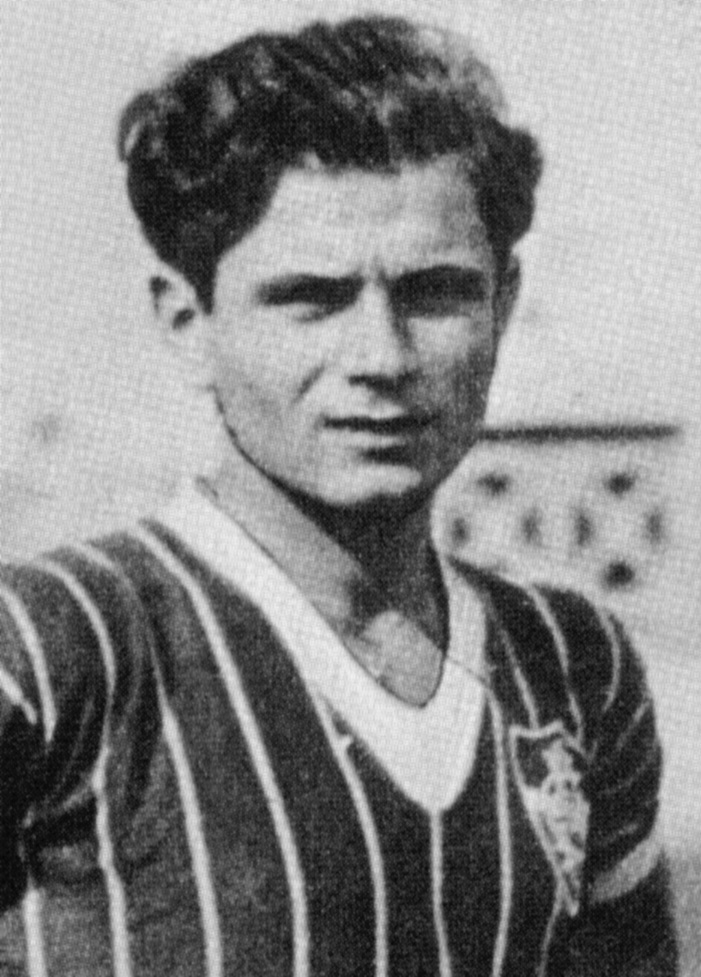
Preguinho
 Germany
association football player•volleyball player•beach volleyball player
Also known as: João Coelho Neto
Doğum Tarihi
February 8, 1905
Burç
Aquarius
Doğum Yeri
Rio de Janeiro, Brazil
Yaş
74 yaşında öldü
Boy
5 ft 9½ in (1.76 m)
Hakkında
Preguinho, born João Coelho Neto, was a Brazilian footballer remembered as the first captain and first goal scorer for Brazil at a FIFA World Cup. Playing his entire senior career for Fluminense, he scored 184 goals across all competitions and helped the club win multiple trophies. His versatility extended beyond football: he competed in at least ten sports, including volleyball and swimming. Preguinho remains a symbol of early Brazilian football and a one-club legend, honored with a statue by Fluminense.
İlk yıllar ve geçmiş
Preguinho'nun babası, yazar Coelho Neto, henüz doğmamış oğlunu annesi hamileyken Fluminense üyesi olarak kaydettirdi. Rio de Janeiro'da büyüyen Preguinho, hem edebiyat hem de atletizmle iç içe büyüdü. Lakabı çocukluk çağındaki bir olaydan gelir: beş yaşındayken babası onu havuza attı ve bir çivi (prego) gibi battı. Buna rağmen mükemmel bir yüzücü oldu ve futbola odaklanmadan önce birden çok sporda yarıştı. Fluminense'deki ilk profesyonel maçına 1925'te çıktı.
Kariyer gelişimi
Preguinho, 1925'ten 1938'e kadar Fluminense'de oynadı, 174 lig maçına çıktı ve 129 lig golü attı. Uruguay'daki ilk 1930 FIFA Dünya Kupası'nda Brezilya'ya kaptanlık yaptı. Brezilya'nın 14 Temmuz 1930'da Yugoslavya'ya karşı oynadığı ilk maçta, Brezilya'nın Dünya Kupası'ndaki ilk golünü attı. Bolivya'yı 4-0 yendikleri maçta iki gol daha ekledi. Brezilya'nın kadrosu Rio ve São Paulo federasyonları arasındaki bir anlaşmazlık nedeniyle zayıflamıştı, ancak Preguinho takımı başarıyla yönetti. 1938'de Fluminense'deki 14 yıllık kariyerinin ardından emekli oldu.
Kariyer zaman çizelgesi
Kamuoyu imajı ve tarzı
Preguinho, Brezilya futbol tarihinde öncü bir figür olarak hatırlanır, Fluminense'ye olan sadakati ve Brezilya'nın ilk Dünya Kupası kampanyasındaki rolüyle kutlanır. On sporlu bir atlet olarak çok yönlülüğü efsanesine katkıda bulunur. Taraftarlar ve tarihçiler onu Brezilya futbolunun romantik döneminin bir sembolü olarak görür. Fluminense'de bir heykelle onurlandırılmıştır ve FIFA retrospektiflerinde yer almaya devam etmektedir. Resmi bir hayran topluluğu adı belgelenmemiştir.
Şöhret ve hayran kitlesi (iFAMOUS Rankings)
The statue at Fluminense stands as a silent reflection of a man who once carried the weight of a nation's first World Cup dream. Preguinho remains an icon of early Brazilian football, yet in the vast machinery of modern fame metrics, he currently holds no placement in the published Global Top 1,000 or any Top-100 scope list. The iFANN Global Fame Engine evaluated his standing in August 2026 and determined that while his historical footprint is massive, he does not currently register a specific numeric rank among the world's most famous living or recently deceased figures. This absence reflects the nature of his legacy: preserved in institutional reverence rather than active, algorithmic consumption signals worldwide. There is no formal name for his fanbase, nor are there organized campaigns or digital rituals driving his visibility today. His audience exists primarily through the lens of historians and club loyalists who remember the ten-sport athlete who scored Brazil's opening goal in 1930. While the global stage moves on to new stars, Preguinho's story persists in the quiet corners of sports history, honored by Fluminense but lacking the structured fandom found with contemporary celebrities. He is a figure of the past, remembered for his loyalty and versatility, but his name does not currently appear in the rankings that track current global attention.
İlginç bilgiler ve efsaneler
Preguinho was registered as a Fluminense member before he was even born, a detail that underscores his deep roots in the club. His father, Coelho Neto, coined Rio de Janeiro's nickname "A Cidade Maravilhosa." During the 1930 World Cup, Brazil's team carried a Uruguayan flag in their opening match to win crowd support, a strategic move during the tournament where Preguinho scored four goals in three appearances. A television documentary about his life was produced by Carlos Niemeyer for Canal 100. Beyond football, he competed in at least ten sports, including beach volleyball, winning championships in eight of them. One legendary moment from his career occurred on July 20, 1930, when he scored the first goal of the game for Brazil against Bolivia, a victory that ended 4-0 and marked the first time a Brazilian player scored in a World Cup tournament. This event serves as the primary story told to newcomers about his legendary status. Historical interviews from 1977 detail his deep connection to the club's origins, reinforcing his role as a guardian of the club's history.
Önemli sözler
“I loved Fluminense for as long as I can remember. I couldn't speak properly and Fluminense was in my soul, my heart and my body.”
Aile ve özel yaşam
Preguinho, ünlü yazar Coelho Neto ve eşi Maria'nın oğluydu. Babası, Rio'nun edebi elitinin bir üyesi ve Fluminense'nin erken dönem taraftarlarındandı. Preguinho'nun edebiyata yönelmesi beklenen ağabeyi Mano vardı. Preguinho evlendi ve çocuk sahibi oldu, ancak detaylar özel kaldı. Hayatı boyunca Rio de Janeiro'da yaşadı.
Önemli bağlantılar
İlişkiler ve flört geçmişi
Preguinho'nun romantik ilişkileri hakkında kamu kayıtları azdır. Evliydi ve çocukları vardı, ancak eşinin adı ve evlilik tarihleri yaygın olarak belgelenmemiştir. 1 Ekim 1979'da Rio de Janeiro'da öldü. 2026 itibarıyla vefat etmiştir; ölüm anındaki medeni durumu evliydi.
- EvliPreguinho evliydi ve çocukları vardı, ancak detaylar kamuya açık olarak belgelenmemiştir.
Ölümü ve Sonrası
Ölüm
October 1, 1979 (74 yaşında)
Ölüm Yeri
Rio de Janeiro, Brazil
Ölüm Nedeni
Bilinmiyor
Fluminense Football Club honored the man who scored Brazil's first World Cup goal, cementing his status as an eighth all-time top scorer and one of its greatest idols long after the final whistle. Tributes emerged retrospectively in documentaries celebrating the legacy of João Coelho Neto, known universally as Preguinho, rather than through immediate fan vigils or chart surges that the limited media infrastructure of 1979 could not support. The athlete passed away on October 1, 1979, in Rio de Janeiro at the age of 74, marking the end of a life lived entirely within the city where he played his entire senior career for Fluminense.
His final public appearance occurred two years prior during a historic interview at the club's Laranjeiras stadium, where he discussed the institution's history before vanishing from the public eye until his death. Funeral details, including the burial site and notable attendees, were never made public, and no official program or eulogy text has been released to the general public. Posthumously, he remains celebrated for competing successfully in eight different sports modalities, earning him the title of "the greatest athlete in the world" in certain historical accounts.
Servet (miras değeri)
Kazanılan ödüller (1)
Preguinho'nun kariyeri modern futbol ödüllerinden önceydi. Fluminense ile Torneio Início ve altı ek kupa kazandı. Ballon d'Or gibi bireysel ödüller onun döneminde mevcut değildi.
00Kulüp
Fluminense
Tanındığı işler
First Brazilian to score in a FIFA World Cup
1930 · Forvet
Captain of Brazil at 1930 World Cup
1930 · Kaptan
One-club career with Fluminense
1925–1938 · Forvet
Anahtar Kelimeler
Kaynaklar
Kısa Bilgiler
- Meslek
- association football player, volleyball player, beach volleyball player
- Doğum
- +1905-02-08
- Doğum Yeri
- Rio de Janeiro
- Ölüm
- +1979-10-01
- Ölüm Yeri
- Rio de Janeiro
- Cinsiyet
- Erkek
- Burç
- Aquarius
Kişisel bilgiler
- Tam Adı
- João Coelho Neto
- Boy
- 5 ft 9½ in (1.76 m)
- Eğitim
- Local schools in Rio de Janeiro
Sıkça Sorulan Sorular
Preguinho lakabını nasıl aldı?
Preguinho, Dünya Kupası'nda gol atan ilk Brezilyalı mıydı?
Preguinho, Brezilya için kaç gol attı?
Preguinho hangi mevkide oynadı?
Preguinho kaç spor dalında yer aldı?
Topluluğa katıl
hayran tartışıyor